Adhisye Rahmawati
…Too cool to be true? Cooling demand based on the (enriched) semantic 3D city model of Rotterdam
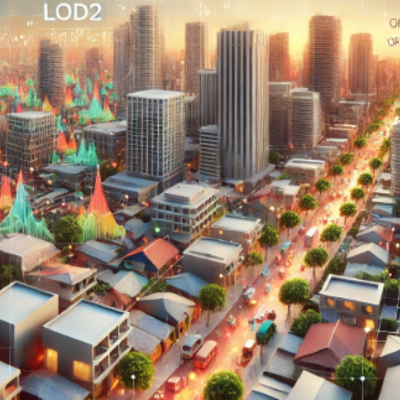
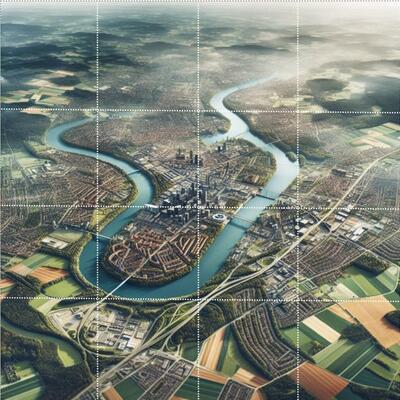
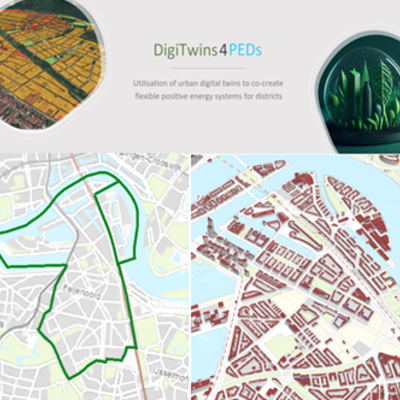
The DigiTwins4PEDs project explores the role of Urban Digital Twins in advancing Positive Energy District (PED) initiatives. This thesis will contribute to the project by simulating cooling demand in buildings of selected study areas within the municipality of Rotterdam, e.g., in the district (Wijk) of Feijenoord. The objective of this research is to simulate the energy demand for cooling within the study areas using a CityGML-based 3D city model. The research methodology involves enriching the city model with energy-related data needed to estimate cooling demand. Algorithms will be developed to detect buildings with insufficient or inaccurate data, as these inaccuracies may cause discrepancies in cooling demand simulation results when comparing outcomes from different simulation methods. SimStadt and Nieman models will be used to simulate and compare cooling demand results. However, the Nieman model has limitations, such as the lack of 3D geometry integration, which leads to less reliable estimates. Furthermore, the simulations will consider the year 2050 to account for projected climate changes, which are expected to increase cooling demand due to rising temperatures. The simulation results will be analyzed, and a pipeline will be defined to store significant results into the 3DCityDB extended with the Energy ADE. This research also includes evaluating the accuracy of the simulated cooling demand and exploring effective methods for presenting these values.
Supervisors: Dr. Giorgio Agugiaro and Dr. Weixiao Gao
(company involved: Gementee of Rotterdam: Mr. Frerye Hechavarria)